A child covers their ears at a birthday party. Another refuses certain clothes or textures. Another continually jumps, spins or touches objects. These behaviours may look unrelated, but for some autistic children they reflect differences in how sensory information is experienced, processed and regulated by the central nervous system.
Sensory processing includes how the nervous system responds to sound, touch, movement, visual information, taste, smell and internal body sensations (interoception).
Behaviour May Be Communication
A child’s response is often easier to understand when parents ask: What is happening around my child immediately before this behaviour occurs? Bright fluorescent lighting, unpredictable sounds, crowded rooms, uncomfortable clothing tags, hunger, fatigue or difficulty communicating an immediate need can all influence sensory overload and behavioural responses.
Regulation Is Not the Same as Forcing Tolerance
The clinical objective should not necessarily be to make a child tolerate every overwhelming sensation. Instead, supportive care involves:
- Identifying specific sensory triggers in home and school environments.
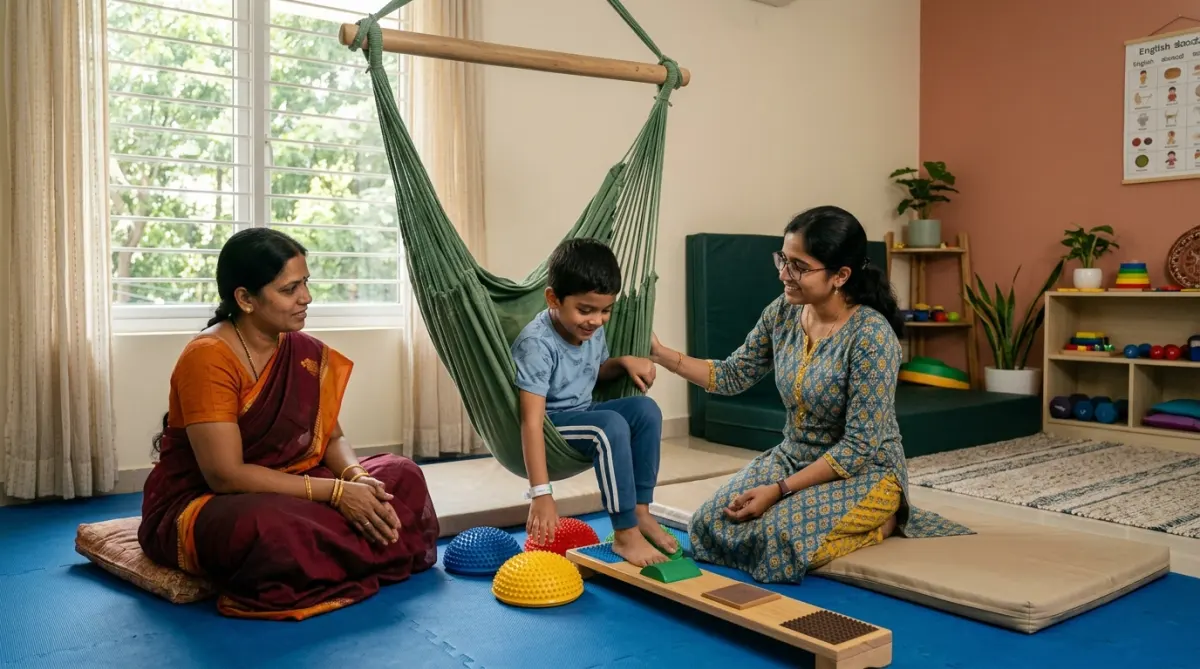
- Adapting sensory surroundings (providing quiet corners, noise-cancelling headphones, or weighted items where appropriate).
- Gradually developing self-regulation and coping strategies.
- Helping the child communicate discomfort before reaching a dysregulated state.
A child’s sensory profile can also fluctuate depending on overall stress, sleep quality, illness and changing environmental demands.
Look Beyond a Single Therapy
A child who appears sensory seeking may also have motor coordination, speech communication or attentional needs. Similarly, feeding difficulties often involve sensory texture preferences but can also be associated with swallowing, gastrointestinal discomfort or nutritional imbalances. This is why multidisciplinary assessment and holistic evaluation provide meaningful clarity.
Clinical Guidance & Next Steps
Discuss persistent sensory challenges with the clinical team so that triggers, functional impact and broader developmental needs can be reviewed together.