Children with Down syndrome do not follow one identical developmental trajectory. While some children may need significant support for muscle hypotonia and gross motor development, others may excel physically but require dedicated guidance for expressive speech, articulation or sensory processing. Therapy planning should begin with the child’s individual strengths and functional needs rather than generalised assumptions.
Key Areas of Comprehensive Support
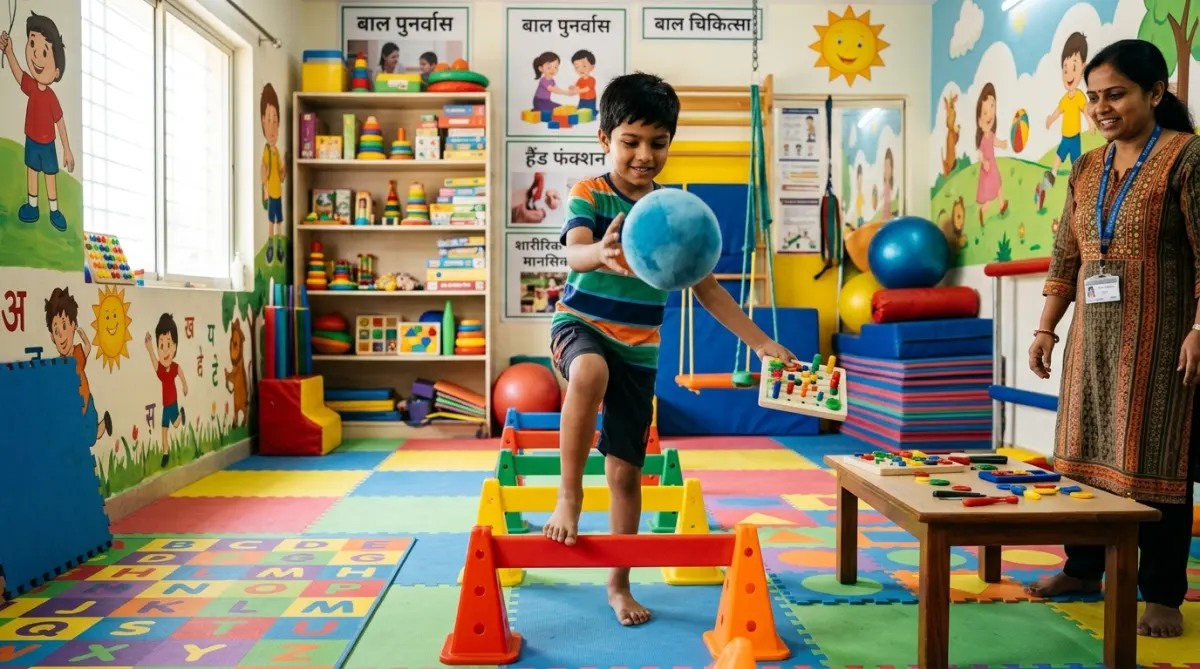
- Postural Tone & Motor Skills: Strengthening core stability, balance and coordination to support confident sitting, crawling and walking.
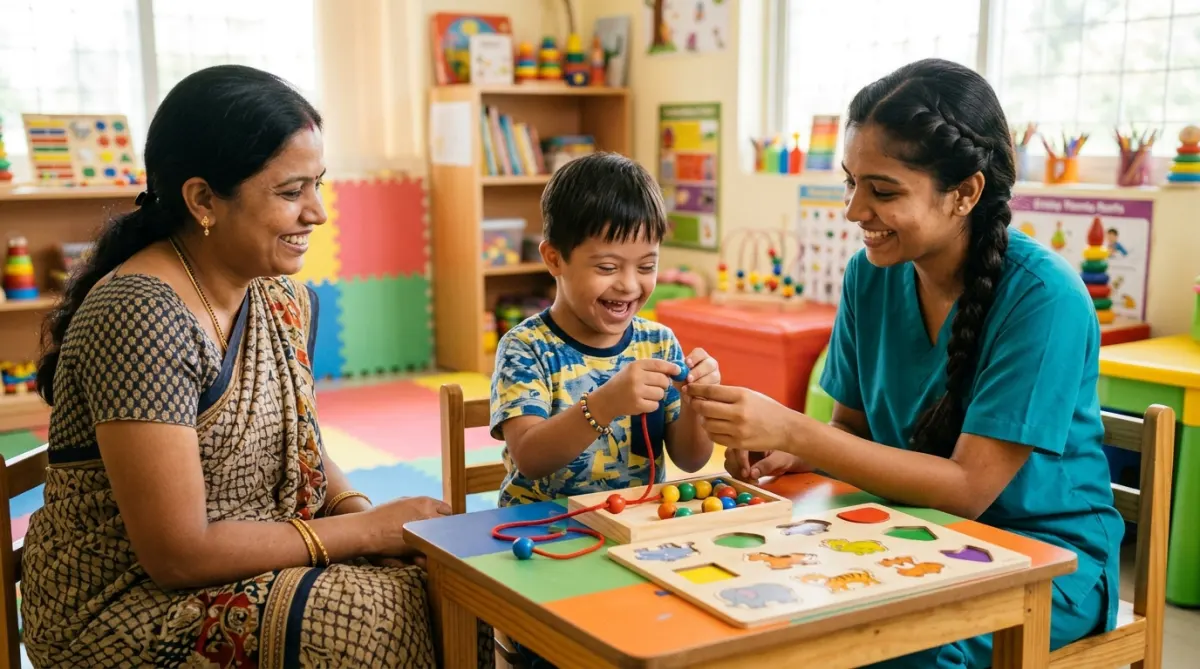
- Speech, Language & Oral Motor: Facilitating expressive communication through vocal play, speech therapy and visual communication supports.
- Fine Motor & Self-Care: Building finger dexterity for feeding, holding pencils, buttoning shirts and self-care independence.
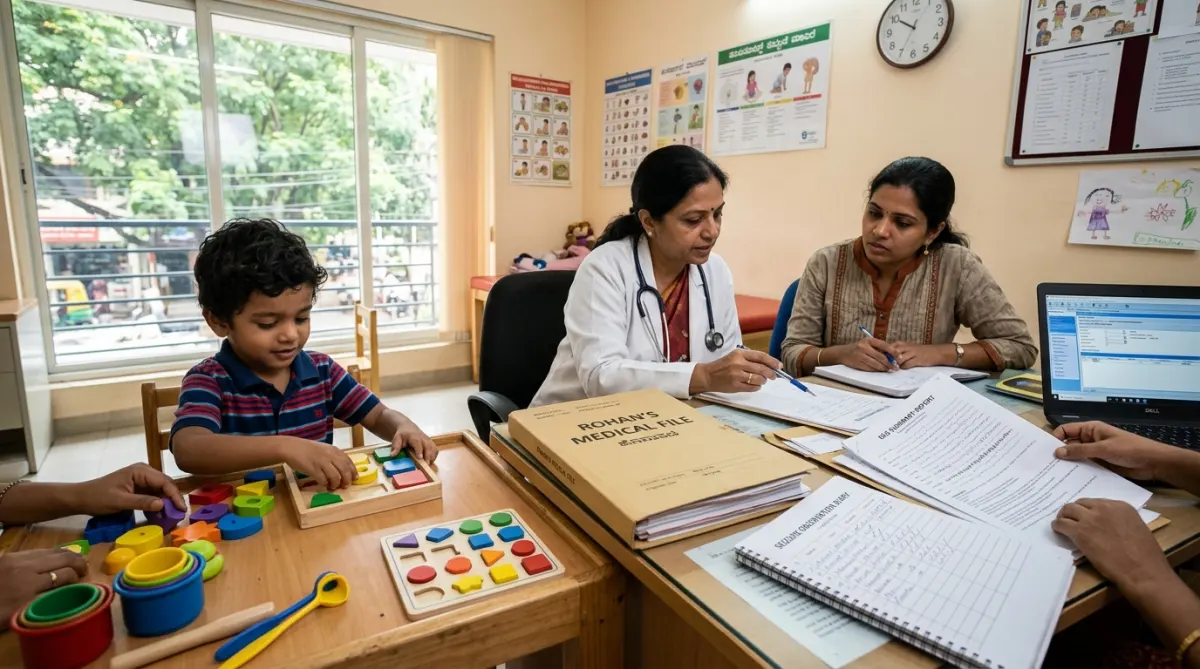
- Routine Medical Surveillance: Regular monitoring of thyroid function, hearing, vision and cardiovascular health per standard pediatric guidelines.
Development Flourishes in Daily Life
Skills become meaningful when children use them during real-world interactions: playing with siblings, helping at the dining table, communicating with classmates and exploring their environment. Parents and therapists can partner to translate clinical exercises into joyful everyday routines.
Celebrating Authentic Progress
The objective of developmental care is not to force a child into someone else’s rigid timeline, but to expand opportunities for participation, communication, joyful learning and lifelong independence.
Care Strategy
Build a coordinated plan around your child's current developmental priorities combined with regular pediatric health screenings.