Children bump into things, drop items and stumble while learning new physical skills. Occasional clumsiness is part of growing up. However, when motor coordination difficulties repeatedly interfere with dressing, handwriting, playground participation, sports or self-esteem, looking closer can help uncover whether additional developmental support is needed.
Gross and Fine Motor Skills Work Together
Parents may notice specific patterns:
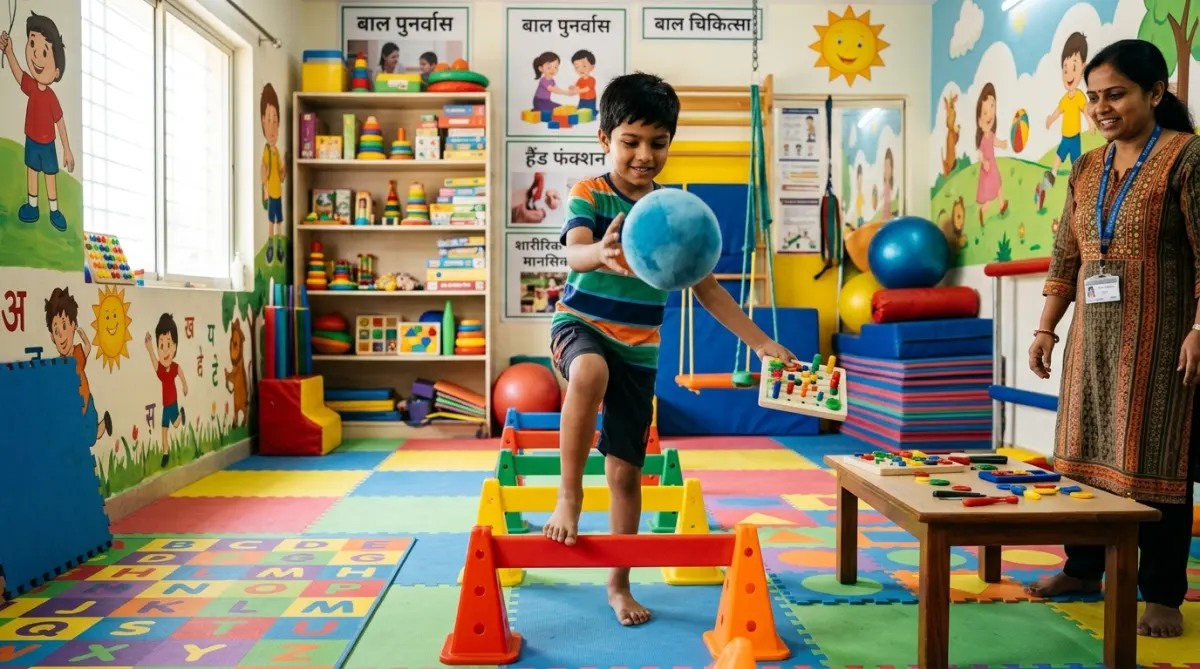
- Gross Motor Challenges: Difficulty running, hopping, navigating stairs, riding a tricycle/bicycle or catching a ball.
- Fine Motor Challenges: Struggling with cutlery, buttoning shirts, tying shoelaces, using scissors or maintaining pencil grip.
Motor execution depends on an intricate interplay between vision, vestibular balance, proprioceptive sensory feedback, motor planning (praxis) and muscle tone. Simply exercising a muscle does not resolve coordination without integrating motor planning.
Assessment Asks “Why?”
Coordination challenges can stem from Developmental Coordination Disorder (DCD / dyspraxia), mild cerebral palsy, hypermobility, hypotonia or sensory processing differences. A comprehensive evaluation clarifies the underlying pattern and sets realistic, enjoyable functional goals.
Parent Guidance
If coordination difficulties are consistently impacting your child’s daily routines, confidence or classroom participation, consider a formal developmental evaluation.