Witnessing a child have a seizure can be alarming. Having clear, calm steps prepared in advance empowers parents, teachers and caregivers to respond safely and protect the child from accidental injury.
During a Convulsive Seizure: Practical Dos
- Stay Calm & Note the Time: Look at your watch or phone to record exactly when the seizure begins.
- Clear the Space: Move away sharp objects, hard furniture or dangerous surroundings.
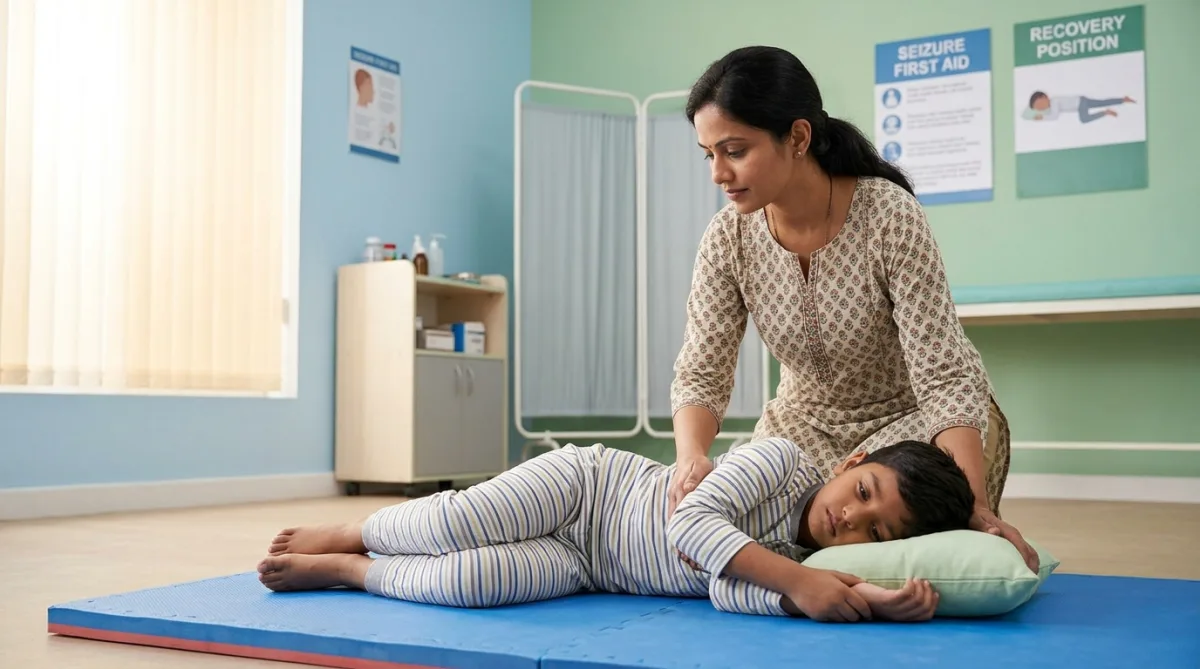
- Cushion the Head: Place a folded jacket, pillow or soft cloth under the child's head.
- Turn Gently on the Side: When possible, position the child onto their side (recovery position) to help saliva drain and keep the airway clear.
- Loosen Tight Clothing: Loosen collars, ties or tight neckwear.
Critical Don’ts During a Seizure
- Do NOT hold the child down or attempt to physically restrain jerking limbs.
- Do NOT put anything in the mouth — no spoons, fingers, cloth, water or medicines. A child cannot swallow their tongue, and placing objects in the mouth causes dental fractures or airway obstruction.
- Do NOT give liquids, food or oral medication until the child is fully conscious and responsive.
When to Seek Emergency Help Immediately
Call for emergency medical assistance if:
- The seizure lasts longer than 5 minutes.
- A second seizure starts immediately without the child regaining full awareness.
- The child experiences breathing difficulty or blue discoloration of lips after jerking stops.
- A serious physical injury occurred during the seizure.
- The seizure occurred in water (bath or pool).
- It is the child's first known seizure episode.
Action Plan
Share a written seizure action plan with family members, babysitters and school staff if your child has an established seizure disorder.